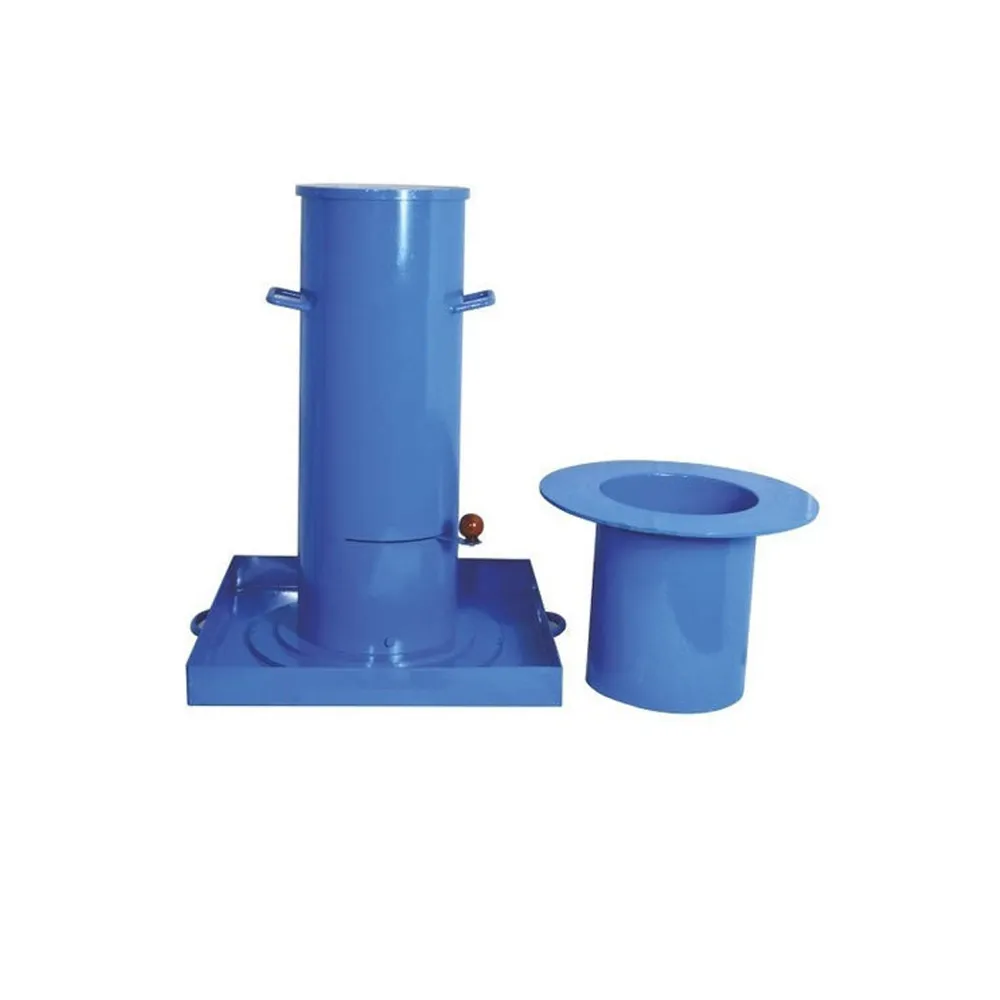
The Sand Pouring Cylinder is a field testing apparatus used to determine the in-situ dry density of compacted soils using the sand replacement method. It is one of the most widely used instruments in civil and geotechnical engineering for quality control of earthworks, road subgrades, embankments, and other compacted fills.
The apparatus works by pouring calibrated dry sand of known density into an excavated hole in the ground, allowing engineers to accurately calculate the dry density of the soil layer being tested.
Applications:
In-situ dry density determination of compacted soil layers
Quality control of road subgrade, sub-base, and embankment compaction
Field verification of compaction as per design specifications
Testing of fine to medium-grained soils in layers up to 50cm thickness
Dam and foundation construction quality assurance
Available Sizes:
100MM – Suitable for thin, fine-grained soil layers
150MM – Standard size for general field compaction testing
200MM – For coarser soils and thicker compacted layers
Features:
Precision-machined cylinder and cone assembly for consistent sand flow
Durable galvanised/mild steel construction for field conditions
Calibration tray included for determining bulk density of sand
Fitted with a shutter valve to control sand flow accurately
Lightweight and portable for easy field use
Compatible with standard Ottawa/Ennore sand used in density testing
Standards: Conforms to IS: 2720 (Part 28), BS 1377 Part 9, and ASTM D1556 for field density determination by the sand cone method.